How Ear Seeds Reach the Vagus Nerve: The Science Inside Your Ear | White Lotus
White Lotus Journal · Science & Research · 8 min read
Rather than stopping at "what are ear seeds," this guide follows the thread inward. We will look at where the vagus nerve emerges in the ear, why touching that point ripples through a much larger system, how the nerve keeps inflammation in check, and what the current studies on ear stimulation genuinely demonstrate. We will also pause on an odd little reflex that confirms the connection, and follow the practice back to Chinese Medicine, centuries before anyone could name a nerve. The modern synthesis owes much to The Great Nerve, the 2025 book by neurosurgeon Dr Kevin Tracey.
A Nerve That Surfaces in the Ear
Your organs answer to many nerves, but few carry the reach of the vagus. It leaves the brainstem and travels the length of the torso, influencing heartbeat, breathing and digestion as it goes. Nearly all of that journey happens out of sight. The exception is a slender offshoot known as the auricular branch of the vagus nerve, or ABVN, historically named Arnold's nerve, which surfaces in the skin of the outer ear.
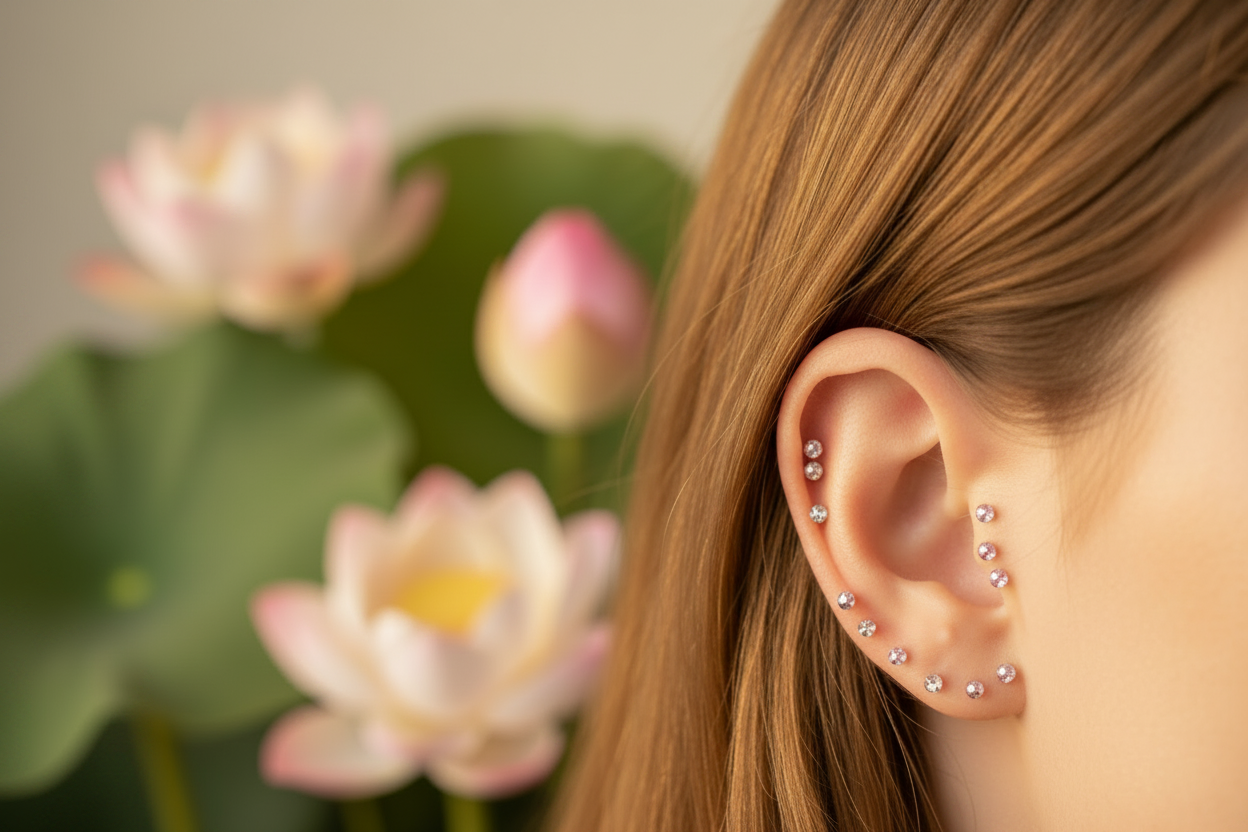
The anatomy texts are unambiguous about why this matters. Across the whole body, the ear is the only place the vagus nerve produces a branch that reaches the skin (Butt et al., 2020). No other external point offers a route to the nerve without a needle passing beneath the surface. Careful dissection studies trace this branch through the concha and cymba concha, the scooped hollows of the ear that acupuncture and ear-seed maps have long favoured.
Reading the Map: How a Touch Travels Inward
When a seed presses on the correct part of the ear, the effect does not stay local. The pressure registers on a nerve that reports straight back to the brainstem, and from there its influence extends to the immune system, the cardiovascular system and the organs. In practical terms the ear functions like a service hatch to one of the body's chief regulators. Laying the components side by side makes the chain of cause and effect clearer.
| Component | Role in the chain |
|---|---|
| Auricular branch (Arnold's nerve) | The sole point at which the vagus nerve emerges at the skin |
| Cymba concha | The part of the ear with the densest vagal supply, and the usual focus of stimulation |
| Cholinergic anti-inflammatory pathway | The vagal loop that signals the immune system to dial down inflammatory output |
| taVNS | Clinical stimulation of that ear zone, linked in trials to lower TNF-alpha and IL-6 |
The Cough That Proves the Connection
One of the plainest pieces of evidence that ear and vagus are joined comes from a reflex most people have never heard of. In certain individuals, touching or probing the ear canal sets off a cough. Known as Arnold's reflex, or the auricular cough reflex, it happens because that same auricular branch supplies the ear canal and shares wiring with the larynx, which manages coughing (Ryan et al., 2014).
Doctors sometimes check for it deliberately, and it turns up in roughly two to three people in a hundred, with links noted to chronic cough treated as a vagal sensory problem (Ryan et al., 2014; Dicpinigaitis et al., 2018). The takeaway is neat: a stimulus in the ear can produce a reaction in the throat only because both hang off the same nerve. Far from being a stray flap of cartilage, the ear is a live junction in a network that spans the body, and ear seeds tap that junction gently.
Inflammation and the Body's Built-in Brake
This is the point at which Dr Tracey's research comes to the fore. He and his colleagues described the inflammatory reflex, together with its restraining side, the cholinergic anti-inflammatory pathway. In this model the vagus nerve keeps watch for inflammation, and once engaged it prompts immune cells to dial back their output of inflammatory signals.
Those signals are pro-inflammatory cytokines, chemicals such as TNF-alpha, interleukin-6 and interleukin-1 beta. When the immune system runs hot, they fuel the soreness, tiredness and tissue strain that underlie many long-term complaints. In The Great Nerve, Tracey sets out how activating the vagus can quiet this signalling, and how the same principle is being tested against conditions from rheumatoid arthritis to inflammatory bowel disease (Tracey, 2025).
Seen this way, the vagus acts as a brake pedal on inflammation, and the auricular branch in the ear is one of the few pedals within easy reach. That is a large part of why ear-based stimulation has drawn such attention, and why resting a seed on the vagal zone of the ear amounts to more than a moment of calm.
What the taVNS Trials Show
Researchers have a formal name for the electrical version of this approach: transcutaneous auricular vagus nerve stimulation, shortened to taVNS. A mild current is delivered to the vagal area of the outer ear, and the body of evidence behind it has grown considerably.
Across these studies the pattern is consistent, with taVNS engaging the cholinergic anti-inflammatory pathway and reducing inflammatory cytokines. A randomised stroke trial called NUVISTA found that taVNS significantly lowered combined pro-inflammatory cytokines and interleukin-6 against a sham comparison (Kimmel et al., 2025). A sepsis pilot recorded drops in TNF-alpha and interleukin-1 beta together with rises in the soothing cytokines interleukin-4 and interleukin-10 (Nicolai et al., 2023). A randomised study in people recovering from COVID-19 saw notable falls in C-reactive protein and interleukin-6 (Nasi-Er et al., 2022).
An Idea Older Than the Anatomy
None of this would have surprised classical Chinese physicians. For upward of two thousand years, their tradition has treated the ear as a therapeutic microsystem, a compact chart of the entire body. The oldest surviving mentions of the ear as a healing site appear in texts placed around 770 to 221 BC, across the Spring and Autumn and Warring States periods, and the great classic of the tradition, the Huangdi Neijing, names the ear as a meeting place of the body's channels while describing ear-based diagnosis and treatment (Hou et al., 2024).
Those early practitioners had no vocabulary for Arnold's nerve or cytokine pathways. Even so, they charted the ear as a switchboard for the whole body and worked with it on that basis. Contemporary anatomy has since supplied the physical explanation their intuition lacked, in the form of the auricular branch of the vagus nerve. Rarely do old practice and new science line up as tidily as they do here.
Bringing Ear Seeds Into Your Routine
Assemble the evidence and the logic holds together. The ear is the only doorway where the vagus meets the skin. That branch feeds reflexes reaching the throat and, by way of the inflammatory reflex, the immune system. taVNS trials indicate that stimulating this precise area can bring inflammatory cytokines down. And a tradition thousands of years old identified the ear as a whole-body access point long before the wiring was mapped.
Ear seeds remain the softest way to engage this striking anatomy. Placed on the vagal zone of the ear and pressed for a few seconds through the day, they turn the science into a small, repeatable ritual. The White Lotus Luxury Crystal Ear Seeds TCM Wellness Ritual Kit combines crystal seeds with the five-element approach of Chinese Medicine, letting you fold this old-yet-newly-supported practice into daily life. If the ear is unfamiliar ground for you, the Luxury Crystal Ear Seeds kit is a thoughtful starting point.
Frequently Asked Questions
What exactly are ear seeds?
Tiny seeds, beads or crystals fixed to points on the outer ear with adhesive and pressed lightly through the day. This needle-free form of auricular acupressure keeps a point stimulated for several days from home.
Why does the ear connect to the vagus nerve?
The vagus sends one branch, Arnold's nerve, to the skin of the outer ear, the only place it surfaces externally. Pressing a seed there feeds a signal into a nerve linked onward to the brainstem, immune system and organs.
Is there evidence that ear stimulation lowers inflammation?
The vagus runs the cholinergic anti-inflammatory pathway. taVNS trials on the same ear zone report reduced cytokines such as TNF-alpha and interleukin-6. Ear seeds engage that zone by pressure rather than current, so they are a gentle home method rather than a clinical device.
What is Arnold's ear-cough reflex?
In some people, touching the ear canal triggers a cough, because the canal is supplied by the auricular branch of the vagus, which shares wiring with the throat. It is visible proof the ear connects to the vagus.
How far back does ear acupuncture go?
More than two thousand years, with the earliest references dated to roughly 770 to 221 BC and recorded in the Huangdi Neijing.
References
- Tracey, K. J. (2025). The Great Nerve: The New Science of the Vagus Nerve and How to Harness Its Healing Reflexes. Penguin Random House. Publisher page
- Butt, M. F., Albusoda, A., Farmer, A. D., & Aziz, Q. (2020). The anatomical basis for transcutaneous auricular vagus nerve stimulation. Journal of Anatomy, 236(4), 588–611. https://doi.org/10.1111/joa.13122
- Ryan, N. M., Gibson, P. G., & Birring, S. S. (2014). Arnold's nerve cough reflex: evidence for chronic cough as a sensory vagal neuropathy. Journal of Thoracic Disease, 6(Suppl 7), S748–S752. PMC4222929
- Dicpinigaitis, P. V., et al. (2018). Prevalence of Arnold nerve reflex in adults and children with chronic cough. Chest, 153(3), 675–681. PubMed 29197546
- Kimmel, A. C., et al. (2025). Transcutaneous auricular vagus nerve stimulation reduces inflammatory biomarkers and may improve outcomes after large vessel occlusion stroke (NUVISTA trial). PubMed 40093228
- Nicolai, E. N., et al. (2023). Transcutaneous auricular vagus nerve stimulation reduces cytokine production in sepsis: an open double-blind, sham-controlled pilot study. Brain Stimulation. ScienceDirect
- Transcutaneous auricular vagus nerve stimulation improves inflammation in individuals with COVID-19: a randomised clinical trial (2022). PMC9604701. PMC9604701
- Hou, Y., et al. (2024). Multi-level exploration of auricular acupuncture: from traditional Chinese medicine theory to modern medical application. Frontiers in Neuroscience. PMC11456840. PMC11456840
This article is for educational purposes and explains the proposed biological mechanism behind ear seeds and the vagus nerve. It does not constitute medical advice, makes no therapeutic claims, and describes an area of ongoing scientific research. Ear seeds are a supportive wellness practice, not a treatment for any medical condition. If you have symptoms that concern you, please speak with a qualified healthcare professional.